Your plumbing system is one of the most important parts of your home, yet it is often ignored until something goes seriously wrong. Leaks, burst pipes, blocked drains and hot water failures do not usually happen overnight; they develop slowly due to lack of maintenance. Annual plumbing maintenance is the smartest way to protect your property, reduce repair costs and avoid stressful emergencies. With regular inspections and professional care, you can keep your plumbing system safe, reliable and working efficiently all year round. Here is a simple yet powerful annual plumbing maintenance guide every homeowner should follow.
Inspect for Leaks Around the Home
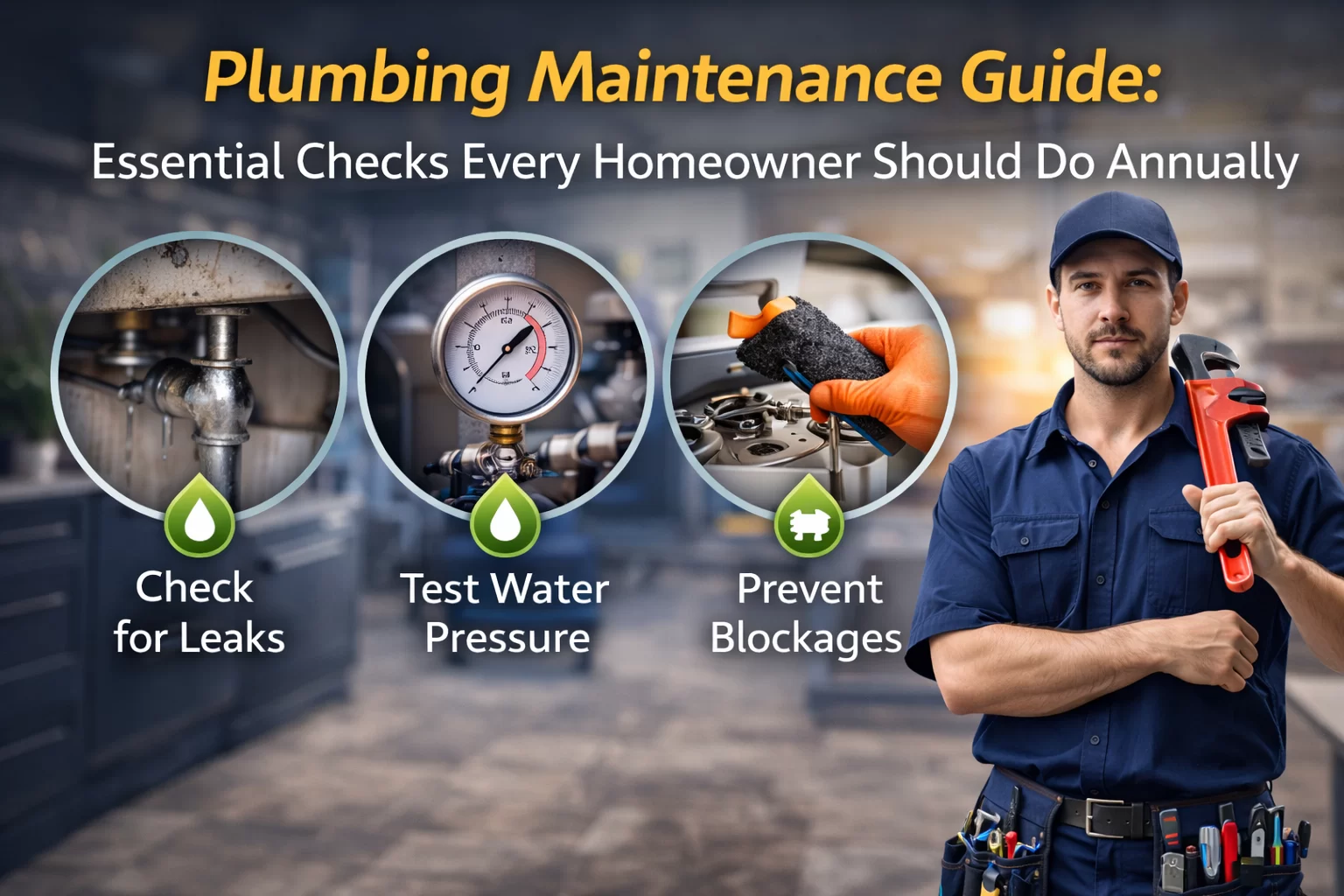
Even the smallest leak can cause serious damage over time. Leaks lead to mould growth, structural damage, increased water bills and unhealthy living conditions. Once a year, carefully check under sinks, around toilets, near water heaters, inside cabinets and behind appliances for signs of moisture or water stains. Listen for dripping sounds and monitor your water bill for unexplained increases. If you suspect a hidden leak, a professional plumber can detect it safely using specialised tools before it becomes a major problem.
Test Water Pressure and Flow
Water pressure plays a big role in how comfortable and efficient your plumbing system is. Low pressure may indicate clogged pipes, leaks or internal system problems, while extremely high pressure can damage pipes and fixtures. Testing your water pressure annually ensures everything is functioning correctly. A professional plumber can adjust pressure levels, clean build-up and repair any underlying issues to protect your plumbing system.
Check Drains and Prevent Blockages
Blocked drains are one of the most common plumbing problems homeowners face. Over time, hair, grease, food particles, soap residue and foreign objects build up inside pipes, slowing drainage and eventually causing complete blockages. Each year, check sinks, showers and toilets for slow draining or unpleasant smells. Avoid using chemical drain cleaners as they can damage pipes. Instead, schedule professional drain cleaning to safely remove build-up and keep your plumbing system flowing smoothly.
Inspect Toilets and Bathroom Plumbing
Toilets often waste water without homeowners realising it. Running toilets, weak flushing or constant refilling are all signs of internal problems. Annually check your toilet for leaks, loose fittings, cracks and unusual noises. Also inspect bathroom taps, shower heads and pipes for leaks or corrosion. Early maintenance prevents costly repairs and improves water efficiency.
Service Your Hot Water System
Your hot water system works hard every day and needs regular servicing to stay safe and efficient. Over time, sediment builds up inside the unit, affecting performance and potentially damaging the tank. Once a year, your hot water system should be inspected for leaks, corrosion, unusual noises and heating problems. Professional servicing improves energy efficiency, extends system lifespan and ensures consistent hot water supply.
Check Outdoor Plumbing and Pipes
Outdoor taps, irrigation lines and exposed pipes are often forgotten, yet they are highly vulnerable to weather damage. Annually check outdoor taps for leaks, cracks and rust. Inspect exposed pipes for wear, corrosion or weak spots. If you live in a colder climate, ensure outdoor pipes are properly insulated to prevent freezing and bursting. Outdoor plumbing maintenance protects both your garden and your home.
Look for Signs of Pipe Corrosion
Older plumbing systems, especially those with metal pipes, can suffer from corrosion over time. Discoloured water, metallic tastes, brown stains, unusual smells and frequent leaks may indicate pipe deterioration. Annual inspections by a professional plumber help identify early corrosion, allowing repairs or replacements before pipes fail completely and cause major water damage.
Check Your Home for Dampness or Mould
Mould is a strong indication of hidden water problems. If you notice musty smells, damp walls, spotted ceilings or mould patches, it may be related to plumbing leaks. Annual home inspections help identify moisture sources early. Fixing plumbing issues quickly protects your health, prevents structural damage and improves indoor air quality.
Schedule Professional Plumbing Maintenance
While homeowners can perform basic checks, there are many issues only a qualified plumber can safely diagnose and repair. Annual professional plumbing maintenance includes detailed inspections, pressure testing, leak detection, drain cleaning and safety checks. This proactive approach prevents unexpected breakdowns, extends the life of your plumbing system and saves money in the long run.
Final Thoughts
Annual plumbing maintenance is not just a recommendation; it is an essential part of protecting your home. Regular inspections help you avoid expensive repairs, prevent water damage, maintain safe water supply and keep your plumbing system running smoothly. With professional care, you gain peace of mind knowing your home is protected and your plumbing is in excellent condition.
Frequently Asked Questions
1. Why is annual plumbing maintenance important?
It helps prevent leaks, blockages, water damage and system failures, saving you money and protecting your home.
2. Can I handle plumbing maintenance myself?
Basic checks are possible, but major inspections and repairs should always be handled by a professional plumber for safety and accuracy.
3. How do I know if my plumbing needs professional attention?
Signs include leaks, low pressure, bad smells, slow drains, high water bills or unusual noises from pipes.
4. How often should I service my hot water system?
At least once a year to maintain safety, performance and efficiency.
5. Does regular plumbing maintenance save money?
Absolutely. Preventive maintenance reduces costly emergency repairs and increases the lifespan of your plumbing system.